
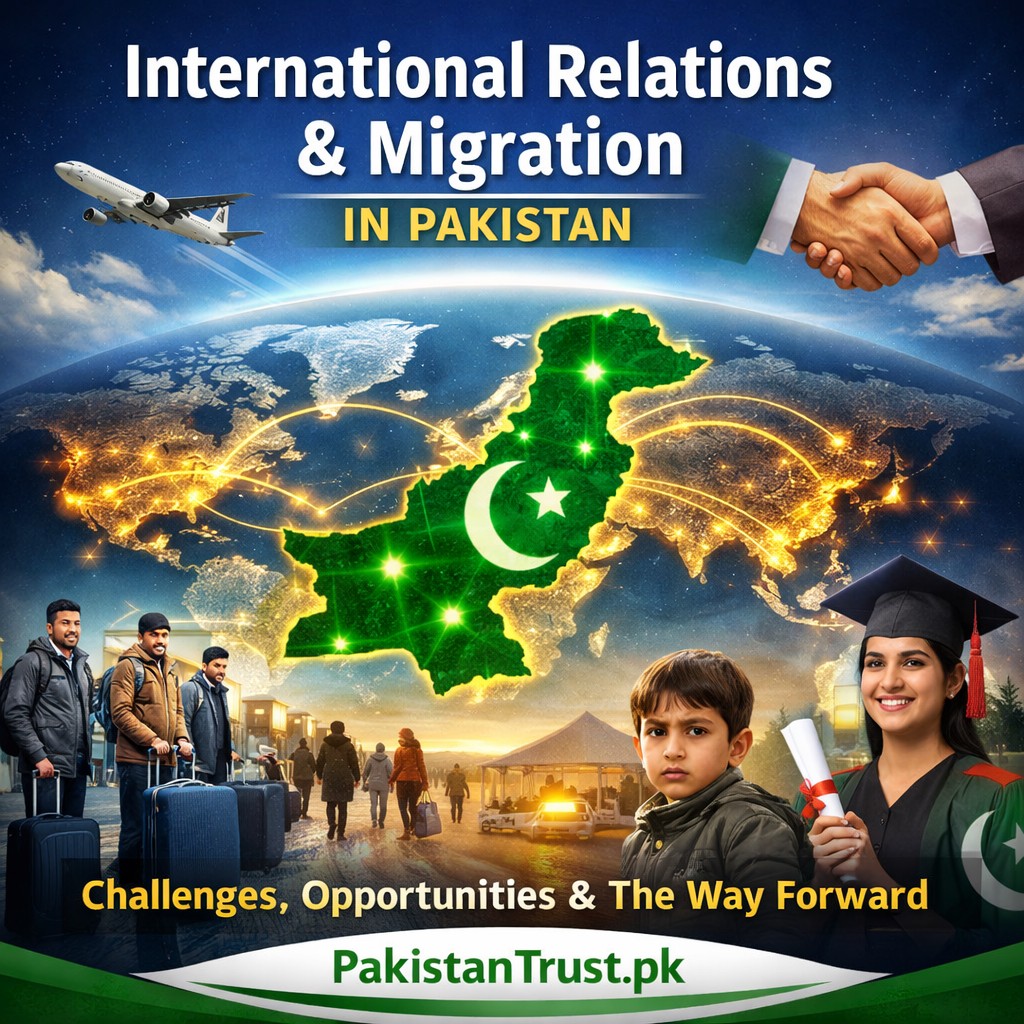
Introduction:
Pakistan’s international relations and migration patterns are deeply connected. As a country located at the crossroads of South Asia, Central Asia, and the Middle East, Pakistan has long played an important role in regional politics, trade, security, and labor mobility. Migration — both inward and outward — has shaped Pakistan’s economy, diplomacy, and global image.
In recent years, international relations have become even more important due to globalization, economic pressures, regional conflicts, and shifting global alliances. At the same time, millions of Pakistanis are working abroad, sending remittances home and contributing to the country’s financial stability.
This article explores how Pakistan’s foreign relations influence migration trends, the role of overseas Pakistanis, refugee issues, economic impacts, and future opportunities.
Pakistan’s Strategic Position in Global Politics:
Pakistan shares borders with India, Afghanistan, Iran, and China. This unique geographic location gives Pakistan strategic importance in international relations.
Pakistan maintains strong diplomatic and economic ties with countries such as:
- China
- Saudi Arabia
- United Arab Emirates
- United States
- Turkey
Through initiatives like the China-Pakistan Economic Corridor (CPEC), Pakistan has strengthened economic cooperation with China. Similarly, Gulf countries remain important partners due to labor migration and economic cooperation.
Strong diplomatic relations often create more job opportunities for Pakistani workers abroad, smoother visa processes, and better labor agreements.

Labor Migration: The Backbone of Pakistan’s Economy:
One of the most significant aspects of migration is overseas employment. Millions of Pakistanis work in Gulf countries, Europe, North America, and parts of Asia.
The largest number of Pakistani migrant workers are based in:
- Saudi Arabia
- United Arab Emirates
- Qatar
- Kuwait
- Oman
These workers send billions of dollars in remittances every year. Remittances help stabilize Pakistan’s foreign exchange reserves, support families, and reduce poverty levels.
International relations play a critical role here. When diplomatic ties are strong, labor agreements become easier, and worker rights protections improve. When relations become tense, visa restrictions and employment challenges may increase.

The Role of Overseas Pakistanis:
The Pakistani diaspora is spread across the globe, including in:
- United Kingdom
- United States
- Canada
- Australia
Overseas Pakistanis are not only sending money back home; they are also contributing through investments, business partnerships, education collaborations, and international advocacy.
Their presence strengthens Pakistan’s diplomatic image. Many Pakistani-origin professionals serve in politics, academia, medicine, and business globally, building positive bridges between Pakistan and host countries.

Refugee Situation and Regional Migration:
Pakistan has hosted one of the world’s largest refugee populations, mainly from Afghanistan. Decades of conflict in Afghanistan have led millions of Afghan refugees to seek shelter in Pakistan.
While Pakistan has shown humanitarian support, hosting refugees also brings economic and social challenges. Managing refugee populations requires coordination with international organizations and neighboring countries.
This situation highlights how regional conflicts directly impact migration flows and how international relations influence refugee management policies.
Education Migration and Brain Drain:
Another major migration trend is the movement of Pakistani students to foreign universities. Countries like:
- United Kingdom
- Australia
- Canada
- Germany
attract thousands of Pakistani students every year.
While overseas education provides valuable skills and international exposure, it also raises concerns about “brain drain.” Many highly skilled graduates choose to settle abroad instead of returning to Pakistan.
Improving local opportunities, research funding, and job markets can encourage skilled professionals to contribute to Pakistan’s development.

Trade Relations and Migration Links:
International trade agreements also influence migration. When Pakistan signs trade deals or strengthens economic cooperation, business travel and skilled migration increase.
For example, stronger economic cooperation with China through infrastructure and industrial projects creates new employment opportunities. Similarly, improved relations with European countries may increase student visas and professional exchange programs.
Trade, diplomacy, and migration are interconnected. Economic stability encourages legal migration and reduces irregular migration trends.

Challenges in Migration Management:
Despite the benefits, migration also presents challenges:
1. Worker Exploitation
Some overseas workers face unfair treatment, low wages, or poor working conditions.
2. Illegal Migration
Human trafficking and unsafe migration routes create risks for vulnerable individuals.
3. Brain Drain
Loss of highly educated professionals affects national growth.
4. Diplomatic Tensions
Strained international relations can result in visa restrictions or deportations.
Pakistan must continue improving labor agreements, strengthening embassy services, and ensuring migrant protection.
Climate Change and Future Migration:
Climate change is emerging as a new factor in migration patterns. Floods, droughts, and extreme weather events impact livelihoods, especially in rural areas.
International cooperation is crucial to address climate-related migration. Pakistan’s participation in global climate forums strengthens its diplomatic position and helps secure funding for climate adaptation programs.
Better environmental planning can reduce internal displacement and prevent forced migration.
Government Initiatives and Policy Improvements:
Pakistan has introduced various reforms to manage migration more effectively:
- Digitized passport and visa systems
- Overseas employment promotion bureaus
- Remittance facilitation programs
- Investment incentives for overseas Pakistanis
Strong international engagement allows Pakistan to negotiate better worker protections and economic partnerships.
The Future of Pakistan’s International Relations & Migration:
The future depends on balanced diplomacy, economic stability, and human-centered policies.
Key focus areas should include:
- Expanding skilled labor markets
- Protecting migrant worker rights
- Encouraging diaspora investment
- Managing refugee issues responsibly
- Reducing illegal migration networks
Pakistan’s young population is one of its biggest strengths. With proper training and international cooperation, Pakistani youth can contribute positively both at home and abroad.
Conclusion:
International relations and migration are deeply connected in Pakistan’s development story. Diplomatic ties influence labor opportunities, education pathways, refugee management, and trade partnerships.
Migration brings economic benefits through remittances and global networks, but it also presents challenges like brain drain and worker vulnerability. By strengthening foreign relations, improving domestic policies, and protecting migrant rights, Pakistan can turn migration into a powerful tool for national growth.
A forward-looking approach — built on cooperation, stability, and opportunity — will ensure that migration continues to support Pakistan’s economic and social progress in the years ahead.
Final Opinion – PakistanTrust.pk Perspective.
Pakistan’s future in international relations and migration depends on smart diplomacy and strong internal reforms. Migration should not be seen only as people leaving the country, but as a bridge connecting Pakistan to the world. Overseas Pakistanis are one of our biggest strengths, contributing through remittances, skills, and global networks. However, the government must focus on protecting migrant workers, reducing brain drain, and creating better opportunities at home. If Pakistan balances foreign relations with economic stability and youth empowerment, migration can become a powerful tool for national growth rather than a challenge. A forward-looking, people-centered approach is the key to long-term success.