
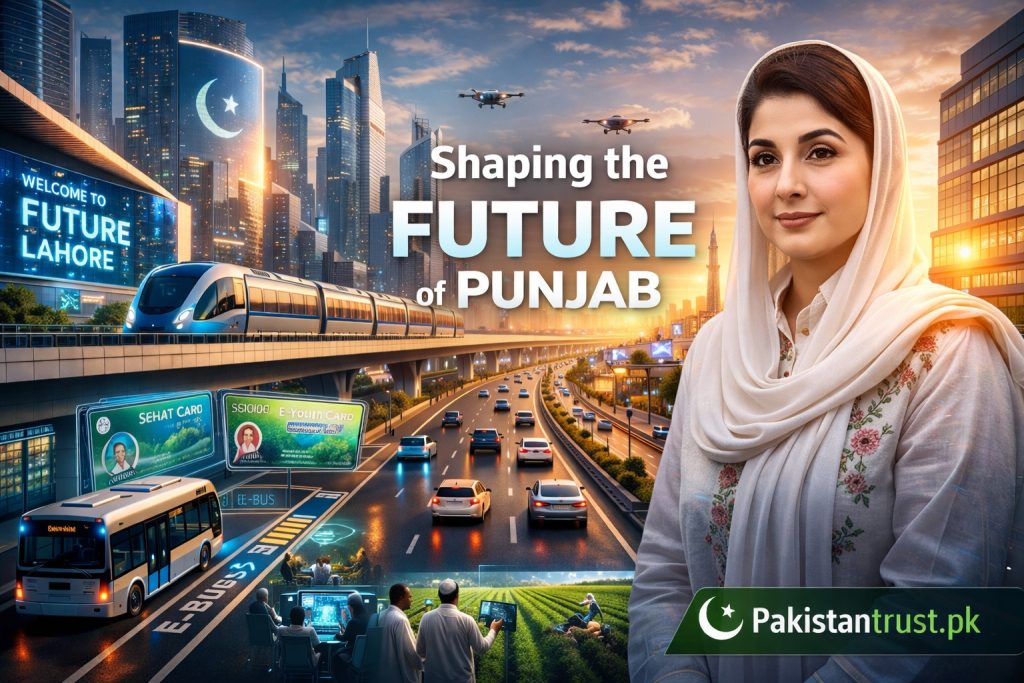
Punjab is the largest and most politically important province of Pakistan. The Chief Minister (CM) of Punjab plays a central role in shaping policies, launching development projects, and improving the daily lives of millions of citizens. In recent years, the office of the Chief Minister has focused on public welfare, infrastructure development, healthcare reforms, education improvements, and digital transformation.
Currently, Punjab is led by Maryam Nawaz, who became the first female Chief Minister of Punjab in 2024. Her leadership marks a historic moment in Pakistan’s political landscape. As a senior leader of Pakistan Muslim League (N), she has introduced several initiatives aimed at improving governance, empowering women, and strengthening the province’s economy.
Political Background and Leadership Style.
Maryam Nawaz comes from a prominent political family and is the daughter of Nawaz Sharif, a three-time Prime Minister of Pakistan. Over the years, she has built her own political identity through public engagement, party organization, and active campaigning.
As Chief Minister, her leadership style focuses on:
- Public accessibility
- Rapid policy implementation
- Youth and women empowerment
- Transparent governance
Her administration emphasizes performance-based governance, aiming to show visible development within a short period.
Major Development Projects in Punjab.
The Chief Minister’s office has launched multiple projects across different sectors. Below are some of the key initiatives shaping Punjab’s future.
1. Health Sector Reforms
Healthcare remains one of the top priorities of the Punjab government. The CM has focused on upgrading public hospitals, improving emergency services, and expanding healthcare access in rural areas.
Key initiatives include:
- Revamping government hospitals
- Free medicines in public facilities
- Modern diagnostic laboratories
- Expansion of health insurance programs
The Sehat Card program has been strengthened to provide free treatment for deserving families. This initiative helps reduce the financial burden on low-income households.

2. Education Development Programs
Education reforms are central to long-term development. The Punjab government has taken steps to improve infrastructure in public schools and introduce digital learning systems.
Major improvements include:
- Renovation of government schools
- Recruitment of qualified teachers
- Smart classrooms with digital boards
- Scholarships for talented students
Special focus has been placed on female education, ensuring girls in rural areas have access to safe and quality schooling.

3. Infrastructure and Urban Development
Infrastructure development plays a key role in economic growth. The CM Punjab has accelerated work on road networks, public transport systems, and urban beautification projects.
Key projects include:
- Construction and rehabilitation of roads
- Expansion of metro and public transport services
- Clean city initiatives
- Drainage and water supply improvements
Cities like Lahore, Faisalabad, and Multan are seeing visible development in urban infrastructure.

4. Women Empowerment Programs
As Punjab’s first female Chief Minister, Maryam Nawaz has strongly emphasized women’s rights and economic independence.
Key initiatives include:
- Interest-free loans for women entrepreneurs
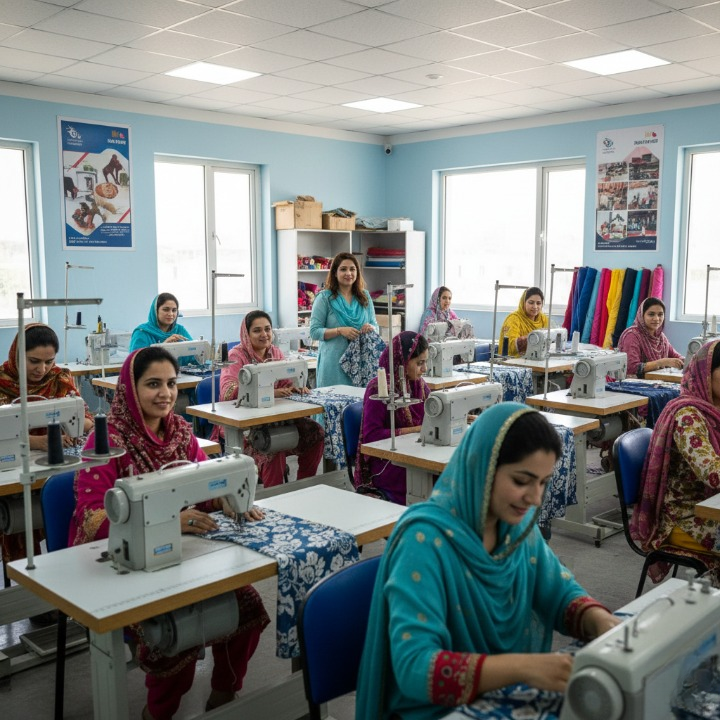
- Skill development centers
- Protection laws against harassment
- Financial assistance programs for widows
These projects aim to increase women’s participation in business and employment sectors.
5. Youth Development and Employment Schemes
Punjab has a large youth population. Recognizing this, the CM launched programs focused on employment and skill development.
Important initiatives:
- Laptop distribution schemes
- IT training programs
- Startup support funding
- Internship programs in government departments
These programs aim to prepare young people for digital and global job markets.

6. Agriculture and Farmer Support
Punjab is known as the agricultural heart of Pakistan. Supporting farmers remains a major priority for the provincial government.
Major efforts include:
- Subsidies on fertilizers
- Modern irrigation systems
- Solar tube well programs
- Wheat support price stabilization
These initiatives aim to increase crop production and protect farmers from economic instability.

7. Digital Punjab Vision
The Punjab government is also focusing on digital governance and technology-driven solutions.
Digital reforms include:
- Online public service portals
- E-governance systems
- Digital complaint registration
- Transparent tender processes
This digital shift aims to reduce corruption and improve public service delivery.
Social Welfare and Public Relief Programs.
The CM has also introduced social welfare initiatives for low-income families. These include:
- Ramzan relief packages
- Utility subsidies
- Cash assistance programs
- Price control mechanisms
Such programs aim to reduce inflation pressure on common citizens.
Challenges Facing the Punjab Government.
Despite these efforts, the government faces several challenges:
- Economic pressure and inflation
- Energy shortages
- Rapid population growth
- Political opposition criticism
Managing these challenges requires careful planning and strong coordination between departments.
Public Response and Political Impact.
Public reaction to the Chief Minister’s initiatives has been mixed. Supporters praise rapid development work and active governance, while critics question sustainability and long-term planning.
However, her leadership represents a new chapter in Punjab’s political history, especially as the province witnesses its first female Chief Minister leading large-scale projects.
Future Outlook for Punjab.
Looking ahead, the Punjab government aims to:
- Expand healthcare coverage
- Improve industrial investment
- Promote tourism
- Strengthen law and order
If successfully implemented, these policies could significantly improve the province’s economic and social indicators.
Conclusion:
The Chief Minister of Punjab holds one of the most influential political positions in Pakistan. Under the leadership of Maryam Nawaz, Punjab is experiencing a period of rapid policy announcements and visible development initiatives. From healthcare reforms to infrastructure projects, women empowerment programs to youth development schemes, the provincial government is actively working to reshape Punjab’s future.
While challenges remain, the direction of governance reflects a strong focus on modernization, welfare, and economic growth. The coming years will determine how effectively these policies translate into long-term progress for the people of Punjab.
Pakistantrust.pk Opinion: A New Direction for Punjab’s Governance :
The leadership of Maryam Nawaz as Chief Minister of Punjab represents a significant political shift in the province’s history. As the first woman to hold this position, her governance style has attracted both attention and expectations. From healthcare upgrades to infrastructure development and women empowerment programs, her administration is working to create visible change within a short time.
In my opinion, the real success of these projects will depend on long-term sustainability rather than short-term announcements. Punjab needs consistent policy implementation, transparency, and economic stability to truly benefit from these reforms. If the government continues focusing on public welfare, digital governance, and youth empowerment, Punjab can move toward a stronger and more progressive future.