
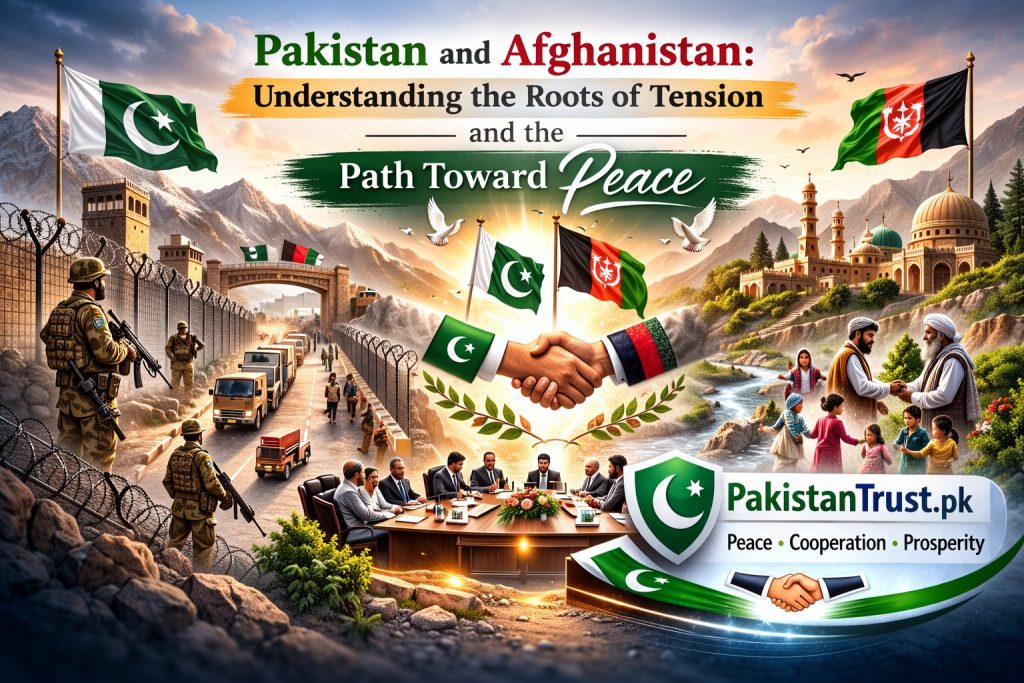
For decades, the relationship between Pakistan and Afghanistan has been complex, sensitive, and deeply shaped by history, geography, and politics. Although the two neighboring countries share cultural ties, religion, and long borders, tensions have repeatedly surfaced over security concerns, border disputes, and regional stability.
This article explores the background of tensions between Pakistan and Afghanistan, the major causes behind conflicts, and the importance of peace for both nations and the wider region.
1:- Historical Background of Relations:
The modern relationship between Pakistan and Afghanistan began in 1947 when Pakistan gained independence from British India. Afghanistan was the only country that initially voted against Pakistan’s admission to the United Nations. The main issue revolved around the Durand Line, the 2,640-kilometer border drawn in 1893 between British India and Afghanistan.
Afghanistan has historically questioned the legitimacy of this border, while Pakistan considers it an internationally recognized boundary. This disagreement has remained one of the core issues in their bilateral relations.
Despite tensions, the people of both countries share deep ethnic, cultural, and religious connections. Millions of Afghans have lived in Pakistan over the decades, especially during times of war in Afghanistan.

2:- Impact of the Soviet-Afghan War:
The relationship between the two countries changed significantly during the Soviet invasion of Afghanistan in 1979. Pakistan became a frontline state supporting Afghan resistance fighters (Mujahideen), with backing from international allies.
Millions of Afghan refugees crossed into Pakistan during this time. Cities like Peshawar and Quetta hosted large Afghan communities. While Pakistan provided shelter and support, the long-term effects included the spread of weapons, militancy, and instability in border regions.
The war left a lasting impact on regional security and shaped future tensions.

3:- Rise of the Taliban and Regional Security Concerns:
In the 1990s, the Taliban emerged as a major political and military force in Afghanistan. Pakistan officially recognized the Taliban government when it first came to power in 1996. However, after the events of September 11, 2001, and the US-led intervention in Afghanistan, regional politics shifted dramatically.
Following the US withdrawal in 2021 and the return of the Taliban to power, new security challenges emerged. Pakistan has expressed concerns about militant groups operating near the border, particularly groups that it claims use Afghan territory to carry out attacks inside Pakistan.
On the other hand, Afghan authorities have sometimes accused Pakistan of interference in their internal affairs. These mutual accusations have contributed to diplomatic strain.
4:- Border Clashes and Military Tensions:
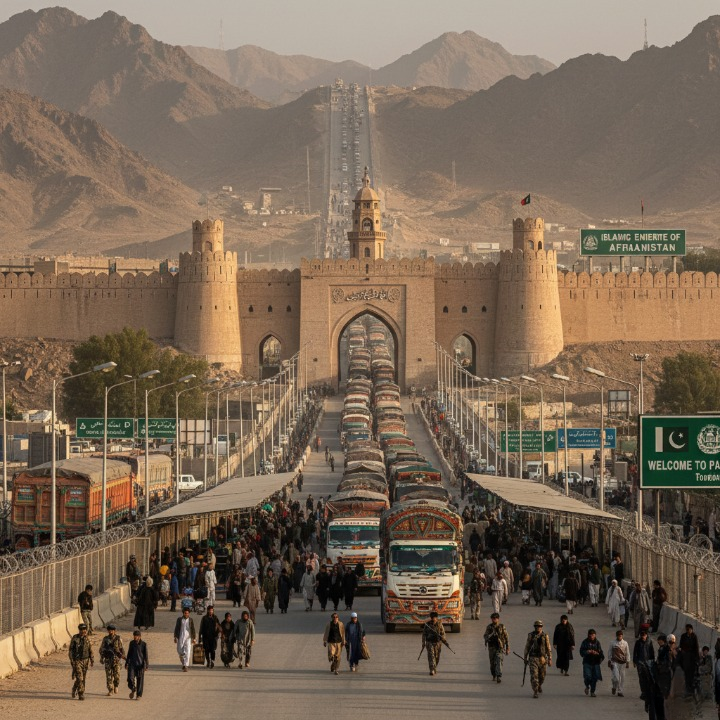
In recent years, there have been several reported border skirmishes between Pakistani and Afghan security forces. These incidents often occur at crossing points like Torkham and Chaman.
The construction of border fencing by Pakistan has also been a point of dispute. Pakistan argues that fencing is necessary to prevent illegal crossings and militancy, while Afghan authorities have raised objections in certain areas.
Although these clashes are usually limited in scale, they create tension among civilians living near the border and disrupt trade and daily life.

5:- Economic and Trade Relations:
Despite political tensions, Pakistan and Afghanistan share important economic ties. Afghanistan relies heavily on Pakistani ports, particularly Karachi, for imports and exports. Trade routes between the two countries are vital for Afghan businesses and regional connectivity.
When border crossings are closed due to political or security reasons, traders and transporters on both sides suffer losses. Small businesses and daily wage workers are often the most affected.
Economic cooperation has the potential to improve trust between the two nations if managed effectively.

6:- The Human Cost of Conflict:
One of the most important aspects often overlooked in political discussions is the human cost of tension and war. Families living in border areas experience fear, displacement, and economic hardship whenever clashes occur.
Afghan refugees in Pakistan have also faced uncertainty over their legal status in recent years. Many families have lived in Pakistan for decades and built their lives there.
Ordinary citizens in both countries generally desire peace, stability, and opportunities for economic growth rather than prolonged conflict.

7:- The Importance of Dialogue and Diplomacy:
Diplomatic engagement remains the most effective way to resolve disputes between Pakistan and Afghanistan. High-level meetings, military-to-military communication, and trade negotiations play a crucial role in preventing escalation.
Regional peace is not only important for these two countries but also for South and Central Asia as a whole. Stability in Afghanistan directly affects Pakistan’s security and economic prospects.
Constructive dialogue, border management agreements, and counter-terrorism cooperation can help build mutual trust over time.

8:-The Role of Regional and Global Powers:
Regional countries such as China, Iran, and Central Asian states closely monitor developments between Pakistan and Afghanistan. Stability in the region is essential for trade corridors and economic initiatives.
Global powers have also played significant roles in Afghanistan over the past decades. International engagement and humanitarian support continue to influence regional stability.
However, long-term peace ultimately depends on direct cooperation between Pakistan and Afghanistan rather than external intervention.

A Future Focused on Stability
While tensions between Pakistan and Afghanistan have historical roots, the future does not have to mirror the past. Both countries share deep cultural ties and common challenges such as poverty, unemployment, and climate change.
Instead of conflict, collaboration in trade, security, and infrastructure could bring long-term benefits to millions of people on both sides of the border.
Peace is not just a political goal — it is a necessity for regional development and human security.
Final Thoughts
The relationship between Pakistan and Afghanistan remains sensitive and evolving. Border disputes, security concerns, and political mistrust have caused repeated tensions over the years. However, shared history, cultural connections, and economic interdependence also provide a foundation for cooperation.
The path forward requires patience, diplomacy, and a commitment to dialogue. Ultimately, lasting peace between the two neighbors would not only benefit their citizens but also contribute to stability across the entire region.
Opinion by PakistanTrust.pk:
PakistanTrust.pk believes that the relationship between Pakistan and Afghanistan should be guided by dialogue, cooperation, and mutual respect rather than prolonged tension. While historical disputes and security concerns cannot be ignored, lasting peace is essential for regional stability and economic growth. The article highlights the importance of diplomatic engagement, effective border management, and counter-terrorism cooperation to reduce misunderstandings. PakistanTrust.pk emphasizes that ordinary citizens on both sides desire peace and prosperity, not conflict. Strengthening trade ties, improving communication channels, and promoting responsible leadership can help build trust and ensure a more secure and stable future for both nations.