
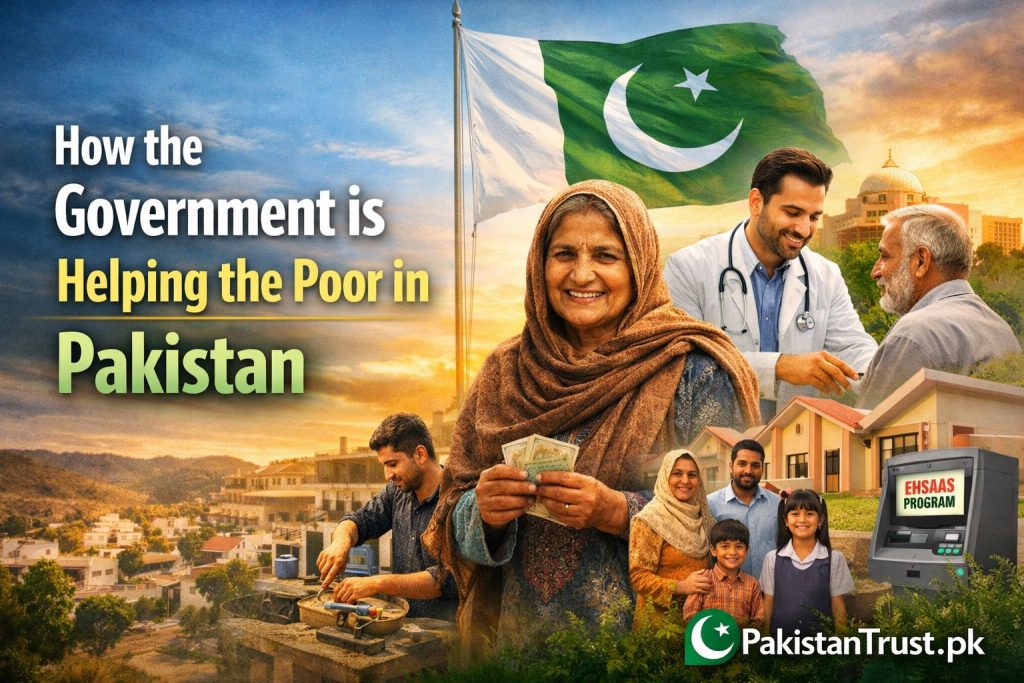
Pakistan has faced many economic challenges over the years. Rising inflation, unemployment, and global financial pressures have made life difficult for millions of families. However, in recent years, the Government of Pakistan has introduced several initiatives aimed at supporting low-income citizens and reducing poverty across the country.
From financial assistance programs to healthcare support and youth empowerment schemes, the government is taking practical steps to create a safety net for vulnerable communities. This article explores how Pakistan is helping its underprivileged citizens and building a more inclusive future.
1. Direct Financial Assistance Programs
One of the most impactful ways the government supports the poor is through direct cash transfer programs. The most well-known initiative is the Benazir Income Support Programme (BISP).
BISP provides financial aid to low-income families, especially women, to help them manage basic household expenses. Payments are distributed transparently through biometric verification systems to ensure that assistance reaches the right people.
In addition, the Ehsaas Program expanded financial inclusion by offering emergency cash assistance during difficult times, including the COVID-19 pandemic. Millions of families received direct support when they needed it the most.
These programs have significantly reduced the financial burden on struggling households and have become a lifeline for many.

2. Subsidized Food and Utility Support
To combat rising inflation, the government has introduced subsidized food programs. Under various relief packages, essential items such as flour, sugar, cooking oil, and pulses are offered at reduced prices.
The Utility Stores Corporation plays a major role in this effort. It provides discounted groceries across Pakistan, helping low-income families afford daily necessities.
In addition, electricity and gas subsidy programs aim to reduce utility bills for economically vulnerable households. These measures ensure that basic needs like food and energy remain accessible.
Such initiatives not only reduce immediate hardship but also promote social stability.

3. Healthcare Support for Low-Income Families
Healthcare expenses can push families deeper into poverty. To address this issue, the government introduced health insurance programs like the Sehat Sahulat Program.
This initiative provides free or subsidized medical treatment to eligible families in both public and private hospitals. From surgeries to emergency treatments, the program covers major healthcare costs.
For families who previously could not afford hospital care, this has been life-changing. It ensures dignity and access to proper medical services without the fear of financial ruin.
Improving healthcare access is one of the strongest steps toward long-term poverty reduction.

4. Education and Scholarships for the Needy
Education is a powerful tool to break the cycle of poverty. The government has introduced scholarship programs and conditional cash transfers to encourage school enrollment.
Under BISP’s education initiative, families receive additional support if their children attend school regularly. This encourages parents to prioritize education over child labor.
Higher education students from low-income backgrounds also benefit from need-based scholarships offered by public universities and government bodies.
By investing in education, Pakistan is preparing a stronger, more skilled generation for the future.

5. Youth Empowerment and Employment Programs
Unemployment is one of the major causes of poverty. To address this, the government has introduced skill development and employment initiatives.
Programs under the Prime Minister’s Youth Programme offer interest-free loans, technical training, and business support to young entrepreneurs.
Small and medium-sized enterprises (SMEs) are encouraged through financial schemes that help individuals start their own businesses. By promoting entrepreneurship, the government aims to create job opportunities at the grassroots level.
When young people are empowered, entire communities benefit economically.

6. Housing Support for Low-Income Families
Shelter is a basic human right. Recognizing this, the government introduced affordable housing schemes such as the Naya Pakistan Housing Program.
This initiative aims to provide low-cost housing solutions for low-income families. Through easy installment plans and government-backed financing, many citizens now have access to safe and stable housing.
Affordable housing improves living standards, health conditions, and overall social well-being.

7. Digital Transparency and Financial Inclusion
Technology is playing a major role in improving welfare delivery systems. Biometric verification, digital payments, and online registration portals reduce corruption and ensure fair distribution.
Mobile banking services allow beneficiaries to receive payments directly in their accounts, increasing transparency and efficiency.
Digital inclusion also empowers rural populations by connecting them to financial services that were previously inaccessible.
This shift toward technology-driven welfare systems strengthens trust between citizens and the government.

Challenges and the Road Ahead
While these initiatives have shown positive results, challenges remain. Inflation, population growth, and limited financial resources create pressure on welfare systems.
Sustainable poverty reduction requires:
- Strong economic growth
- Transparent governance
- Continued investment in education and healthcare
- Public-private partnerships
The government must ensure that assistance programs remain fair, transparent, and accessible.
At the same time, citizens also play a role by supporting lawful processes and promoting accountability.
Conclusion: A Step Toward Social Justice
The Government of Pakistan has taken meaningful steps to support the poor through financial aid, healthcare coverage, education programs, youth empowerment, and housing initiatives. While challenges continue, these efforts reflect a commitment to social welfare and poverty alleviation.
Programs like BISP, health insurance schemes, and youth loans are not just temporary relief measures — they are building blocks for a stronger and more inclusive Pakistan.
A nation progresses when its most vulnerable citizens are protected and empowered. With consistent reforms and community support, Pakistan can move closer to reducing poverty and creating equal opportunities for all.
PakistanTrust.pk Opinion
At PakistanTrust.pk, we believe that supporting the poor is not just a government responsibility but a national duty. Recent welfare initiatives in Pakistan show encouraging progress toward social justice and economic stability. Programs focused on financial assistance, healthcare, education, and youth empowerment are helping vulnerable families regain hope and dignity. However, long-term success depends on transparency, consistency, and sustainable economic planning. Relief efforts must continue alongside job creation and skill development. If implemented effectively and fairly, these initiatives can reduce poverty and strengthen public trust. A prosperous Pakistan begins with uplifting its most vulnerable citizens.